| Profiles of Mathematicians |
| Hermann Minkowski 1864 - 1909
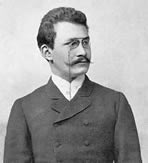 Minkowski first showed his talent for mathematics while studying at the Gymnasium in Königsberg. Already at this stage in his education he was reading the work of Dedekind, Dirichlet and Gauss. The outstanding abilities he showed at this time were noted in a letter that Heinrich Weber, then at Königsberg University, wrote to Dedekind in 1881 (see [13]). He studied at the University of Königsberg, entering the university in April 1880. He spent three semesters at the University of Berlin, for example spending the winter semester of the academic year 1882-83 there. His became close friends with Hilbert while at Königsberg, for Hilbert was an undergraduate at the same time as Minkowski. In 1884, while he was a student at Königsberg, Hurwitz was appointed to the staff. The student Minkowski soon became close friends with the newly appointed academic Hurwitz. Minkowski first showed his talent for mathematics while studying at the Gymnasium in Königsberg. Already at this stage in his education he was reading the work of Dedekind, Dirichlet and Gauss. The outstanding abilities he showed at this time were noted in a letter that Heinrich Weber, then at Königsberg University, wrote to Dedekind in 1881 (see [13]). He studied at the University of Königsberg, entering the university in April 1880. He spent three semesters at the University of Berlin, for example spending the winter semester of the academic year 1882-83 there. His became close friends with Hilbert while at Königsberg, for Hilbert was an undergraduate at the same time as Minkowski. In 1884, while he was a student at Königsberg, Hurwitz was appointed to the staff. The student Minkowski soon became close friends with the newly appointed academic Hurwitz.
He received his doctorate in 1885 from Königsberg for a thesis entitled Untersuchungen über quadratische Formen, Bestimmung der Anzahl verschiedener Formen, welche ein gegebenes Genus enthält. Minkowski became interested in quadratic forms early in his university studies. In 1881 the Academy of Sciences (Paris) announced that the Grand Prix for mathematical science to be awarded in 1883 would be for a solution to the problem of the number of representations of an integer as the sum of five squares. Eisenstein had given a formula for the number of such representations in 1847, but he had not given a proof of the result. In fact the Academy of Sciences had set a problem for the Grand Prix which had already been solved, for Henry Smith had published an outline of a proof in 1867. However the Academy of Sciences were unaware of Smith's contributions when the prize topic was set.  more on this mathematician more on this mathematician |
| Werner Karl Heisenberg 1901 - 1976
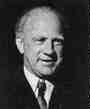 Werner Heisenberg's father was August Heisenberg and his mother was Anna Wecklein. At the time that Werner was born his father was about to progress from being a school teacher of classical languages to being appointed as a Privatdozent at the University of Würzburg. Anna's father, Nikolaus Wecklein, was the headmaster of the Maximilians Gymnasium in Munich and it was while August Heisenberg was a trainee teacher at that school that he had met Anna. August and Anna were married in May 1899. Werner had an older brother Erwin, born in March 1900, who was therefore nearly two years older than the subject of this biography. Werner Heisenberg's father was August Heisenberg and his mother was Anna Wecklein. At the time that Werner was born his father was about to progress from being a school teacher of classical languages to being appointed as a Privatdozent at the University of Würzburg. Anna's father, Nikolaus Wecklein, was the headmaster of the Maximilians Gymnasium in Munich and it was while August Heisenberg was a trainee teacher at that school that he had met Anna. August and Anna were married in May 1899. Werner had an older brother Erwin, born in March 1900, who was therefore nearly two years older than the subject of this biography.
He was an Evangelical Lutheran and his wife Anna had converted from being a Roman Catholic to make sure there were no religious problems with their marriage. August and Anna, however, were only religious for the sake of convention. A Christian belief was expected of people of their status so for them it was a social necessity. In private, however, they expressed their lack of religious beliefs, and in particular they brought up their children to follow Christian ethics but showed total disbelief in the historical side of Christianity. more on this mathematician |
| Phoebe Sarah Marks 1854-1923
 Phoebe Sarah Marks was born in Portsea, England in 1854. She changed her first name to Hertha when she was a teenager. After passing the Cambridge University Examination for Women with honors in English and mathematics, she attended Girton College at Cambridge University, the first residential college for women in England. Charlotte Scott also attended Girton at this time, and she and Marks helped form a mathematics club to "find problems for the club to solve and 'discuss any mathematical question that may arise'". Phoebe Sarah Marks was born in Portsea, England in 1854. She changed her first name to Hertha when she was a teenager. After passing the Cambridge University Examination for Women with honors in English and mathematics, she attended Girton College at Cambridge University, the first residential college for women in England. Charlotte Scott also attended Girton at this time, and she and Marks helped form a mathematics club to "find problems for the club to solve and 'discuss any mathematical question that may arise'".
Marks passed the Mathematical Tripos in 1880, although with a disappointing Third Class performance. Because Cambridge did not confer degrees to women at this time, just certificates, she successfully completed an external examination and received a B.Sc. degree from the University of London.
From 1881 to 1883, Marks worked as a private mathematics tutor, as well as tutoring other subjects. In 1884 she invented a draftsman's device that could be used for dividing up a line into equal parts as well as for enlarging and reducing figures. She was also active in devising and solving mathematical problems, many of which were published in the Mathematical Questions and Their Solutions from the "Educational Times". Tattersall and McMurran write that "Her many solutions indicate without a doubt that she possessed remarkable geometric insight and was quite a clever student of mathematics." more on this mathematician |
| Johann(III) Bernoulli 1744-1807
.jpeg) Johann(III) Bernoulli was a son of Johann(II) Bernoulli. He was certainly considered a prodigy when a child with an encyclopedic knowledge and, like many other members of his extraordinarily talented family, he studied law and took an interest in mathematics. Johann(III) Bernoulli was a son of Johann(II) Bernoulli. He was certainly considered a prodigy when a child with an encyclopedic knowledge and, like many other members of his extraordinarily talented family, he studied law and took an interest in mathematics.
At the early age of fourteen he graduated with the degree of master of law. He was appointed to a chair at Berlin Academy at the age of only 19. Frederick II asked him to revive the astronomical observatory of the Academy but this was not a task for which Johann(III) was particularly well suited. His health had never been particularly good and his qualities as an astronomical observer were relatively poor.
Johann(III) Bernoulli wrote a number of works on astronomy, reporting on astronomical observations and calculations, but these are of little importance. Strangely his most important contributions were the accounts of his travels in Germany which were to have a historical impact.
In the field of mathematics he worked on probability, recurring decimals and the theory of equations. As in his astronomical work there was little of lasting importance. He did, however, publish the Leipzig Journal for Pure and Applied Mathematics between 1776 and 1789.
He was well aware of the famous mathematical line from which he was descended and he looked after the wealth of mathematical writings that had passed between members of the family. He sold the letters to the Stockholm Academy where they remained forgotten about until 1877. At that time when these treasures were examined, 2800 letters written by Johann(III) Bernoulli himself were found in the collection. |
|